Monday, 15 April 2013

Growing Street children - Opportunity to review Uganda’s situation


Uganda is today commemorating the International Day for Street Children under the theme ‘Participation’ which is encouraging the community to give street children and be child-focussed, enabling them to have a key part in all areas of service provision. The day, according to the United Nations’ website provides a platform for the millions of street children around the world and their champions to speak out so that their rights.
Uganda has one of the youngest and fast growing populations in the world. With children constituting 56% of the population and an annual population growth rate of 3.2%, the demographic and developmental significance of children and young people in the country cannot be overemphasized. 

The ratification of the United Nations Conventions and other domestic legislation like the 2009 Prevention of Trafficking in person’s Act and the Children’s Act Cap 59 that protect the rights of a child, champion child justice and down trod child sexual exploitation have not made much change in the situation at hand.
Oketch* 15 years was forced to live on the street after home became unbearable.  With his father occasionally denying him food over petty ‘sins’ like failure to fetch water and brush his shoes, concentration at school became a night mare. What was more traumatic however was his seeing his mother being beaten occasionally.
“Life became so unbearable for me at home it compelled me to leave and look for other survival alternatives in 2011,” he says.
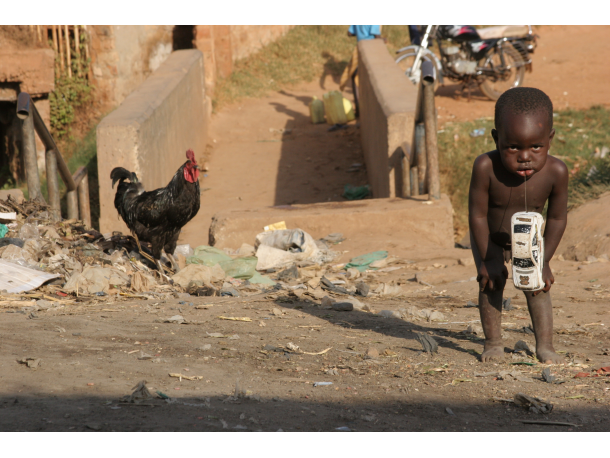
However, life was tougher; he often went hungry and because he could not speak Luganda that other children did as he was a langi. He failed to find a place to sleep as many had their ‘official’ occupants and thus he was often isolated.
However, after three weeks of traversing the street and eating off rubbish pits, he found a Langi friend, also a street child who helped him sell his shoes for food and find safer places to sleep and work. This friend also helped him fit into a group and find work. Oketch worked collecting empty water bottles and scrap.
He said: “Sometimes the money I had worked for the whole day would be taken by other children as we slept.”
He also faced poor treatment by other people, with people calling him unpleasant names and suspecting him of crime.
Then one night, outreach workers from Retrak picked them up and took up in the drop-in centre for rehabilitation. Retrak is a UK based charity that works with street children in Africa to give them alternatives to life on the street. Oketch and his friend now attend regularly and he has been empowered through peer to peer education.
Moses Kabagambe, Executive Director of the I’ll be there foundation says observers that an alarming number of young children in Uganda are surviving on the country’s streets; foraging for scraps of food, begging, stealing or doing the menial jobs. The foundation aims at ending suffering and poverty of street children in Uganda
“Many children are forced onto the street because they were abandoned by their families who couldn’t look after them and others because they were orphaned through AIDS,” he says.
Poverty, family breakups and parental deaths are the foremost reason for the increase in the number of street children. According to the 2011 Uganda Demographic Health Survey (UDHS), there are an estimated 1.2 million orphans due to AIDS deaths.
James Kaboggoza, the assistant commissioner for children in ministry of Gender said many of the street children in Kampala are from Karamoja region and Napak District and are here because they have been trafficked.
“Some of these business men and women go to those regions, convince their parents that they are going to get their children better jobs in Kampala and instead make them beg for money on the streets,” he said during the launch of the 3rd Tumaini awards in Kampala on Tuesday.  

This year’s theme of the Tumaini awards is “Eliminating harmful social and cultural practices affecting children: our collective responsibility.”
Kaboggoza called for the involvement of all stakeholders including government, non-governmental organizations and donor agencies to solve the issue of street children and harmful socio-cultural traditional practices like female genital mutilation, early marriage and child sacrifice affecting children.
The theme for last year’s International Day for Street Children was ‘challenging perceptions.’

Uganda Martyrs Namugongo alumni medical camp helps thousands


Uganda Martyrs Senior Secondary School alumni last week held a medical camp at the school’s pond that saw over 1000 people tested and treated for different ailments like malaria, diabetes and fungal infections among others. This was under their umbrella body, Uganda Martyrs Old Students Association Namugongo (UMOSAN). 

Among these were 120 medical doctors and pharmacists from different universities including Makerere, Gulu and Mbarara. Not only did they prescribe drugs but were also actively involved in tetanus immunization, HIV testing and counselling and donating food and relief items like bed nets and blankets to the patients.
In a survey that was carried out at the end of the survey revealed that women and children had a high turnover compared to men and malaria, Hypertension and Diabetes were the commonest ailments.  
According to Aaron Ssemakula, the chairman UMOSAN, camps such as these are a culture that enables students who have passed through the school to give back freely to the community.
“We are not only stopping at medical camps but other services like career guidance and a lawyers’ camp are in the pipeline,” Ssemakula said.
He however said there was a challenge of gathering drugs from health centres as many were not willing to give their drugs freely for purposes of accountability.
Hon Sarah Ndoboli Kataike, the state minister for health was the chief guest at the function. She advised students to embrace courses like nursing that are selling like hot cake currently. 

She also drew the crowd’s attention to challenges in the health system that is currently limping with blood scarcity and inadequate specialized health workers in anaesthesia and surgery.
“Do not leave your country in search for greener pastures and yet your brothers and sisters are dying. Issues of money are temporary and the health ministry has embarked on increasing health workers salary and is offering scholarships for medical students,” she said.

As a way of encouraging the students to sustain the art of giving back to the community, she offered Shs 1m.
The camp was supported by Kira Health Centre III, Quality Chemicals, and Uganda Martyrs Hospital, Kirekka. This is the fifth year the alumni are holding a medical camp.  

Monday, 1 April 2013

Are our children feeding?


On one of his lucky days, George Kinene, a five year old went to school and was offered a piece of soap and kilogram of maize flour, courtesy of a health camp by the international Health Sciences University (IHSU). Being overwhelmed with the gold in his hands, he excitedly bit a piece of the brown soap and locked it behind his lips. 

No sooner had it got into his mouth than he spat it out with a distasteful look. It had not served his intended purpose-relieving him of his hunger. Perhaps, he thought it was food and one edible on spot. He was disappointed. His parents had packed for him a slice of bread and passion juice that he had finished at break time (about 10:00AM) but was still hungry. It was now 12:15PM and not eaten again.
His school, Jennit Kabel Nursery School in Namuwongo does not have a kitchen and neither does it provide food for the over 100 children that attend the school. Every term (three months), each of their parents pays shs 10,000 for school fees. On a given day, it is no spectacle to see tots scrambling for one another’s packed lunch.
This situation is not any better in the neighbouring Church of Uganda Nursery School where the head teacher has had quarrels with parents over the issue of food.
“Many parents shun the responsibility of packing for their children lunch and breakfast and yet the school does not provide for them because of inadequate funds,” Ruth Naweria, the head teacher says.
In fact, she says some parents have been forced to relocate their children to other schools blaming the school for not providing their children with food. Apart from struggling with parents for food, she also heckles with the neighbours for littering waste around the school that has led to a high incidence of infection among the children.
Nevertheless, it is by the mercy of the church that the school exists. During the week, the premises are a school and on Sunday, it is a congregating area. 

The effect of not having lunch;
Good nutrition is the bedrock of healthy life and it begins in infancy. However, there is a lot of ignorance when it comes to feeding practises for children both from head teachers and parents.  
“Many children exhibit stunted growth and are not achieving the milestones they are supposed to at particular stages in education because they are dull in class,” Teddy Nagaddya, a public health practioner says.
In a survey that was conducted by IHSU in schools around Namuwongo this year, it was identified that most of the children have one meal a day and this is usually eaten late; around 3:00 or 4:00PM. This sentences the children to forage for food usually picking up waste food along dusty, muddy or unhygienic walkways to and fro school.
At Namuwongo Christian Nursery and Primary School, Robert Mutabazi, the headmaster testifies to absenteeism of some children.
“Recently, there is a parent who has not brought his child to school for two days because he is not able to provide him with lunch,” he says.
“The problem of nutrition is being looked into but we are struggling to raise funds to buy foods like posho and beans for lunch.”
This is because the sponsor, Roberta Cursin from England can only afford to pays teachers’ salaries.
The commonest food that these children pack is a blend of boiled beans and maize locally called, ‘nyoyo.’ Those whose parents cannot afford to pack for them usually go back home to eat lunch. 

To abet this problem, Nagaddya says it is important for parents to fully utilize available resources to ensure children’s quality feeding; for example, feeding them on the dodo (a leafy green vegetable) that grows in their backyards.
“Sensitization is key in proving efforts of feeding children successful because some teachers and parents are oblivious of these benefits. Nutrition experts and health practitioners have a big role to play here,” she says.
The recommended diet for a child;
Dr Peter Kirabira, the head of research at IHSU says children need a balanced diet with proteins (beans, peas) carbohydrates (posho, brown rice and bread) fats, vitamins (found in fruits) and essential micro elements like zinc and potassium on a daily basis.
Dr Dorothy Nakimbugwe, a senior lecturer at Makerere University’s department of food technology recommends Vitamin A for boosting a child’s immune system and making him or her less resistant to diseases. 

 Vitamin A is commonly found in fruits and green leafy vegetables such as nakati and cabbages as well as in yellow and orange vegetables such as carrots, pumpkins and sweet potatoes. Milk, eggs and some cereals are also fortified with vitamin A.
“For breakfast, porridge is recommended because it results in a feeling of being full and is rich in Methionine, an Amino Acid that our bodies cannot produce naturally,” she says.
She however notes that caffeine and high sugar intake may adversely affect performance levels of athletes and should be avoided. Also, foods like popcorn and crisps may lead to unnecessary accumulation of gas and should be avoided.
“Apart from good feeding, parents need to ensure to de-worm their children after every three months,” Dr Kirabira urges.

Mukombe’s fight to get to the top


Change is a subject many try to avoid because of unforeseen repercussions. But when fate forces it upon you, it is hard to escape. Instead of sitting back and letting life pass him by, Prince Ronnie Mukombe, a champion of adult education took change by the horns to transform his life and that of his three siblings.
The 32-year-old president of Makerere University’s Journalism and Communication Association (MUJCA) dropped out of school in senior one in 1994 after his father died. Then, he was studying at Makobore High School on a bursary programme after topping Rukungiri district with aggregate four in his Primary Leaving Examinations (PLE).
Owing to the fact that his mother, an illiterate housewife, had no means of fending for the family, his elder brother joined the army. But Mukombe chose to painstakingly job hunt in order to fend for his younger siblings, a decision that made him come to Kampala in 1995.
“When I came to Kampala, I lived a hard knock life- sleeping in trenches and eating off garbage heaps. But every-morning, I would look for a job until a Good Samaritan noticed my politeness, discipline and intelligence and took me on,” he recalls. 

This Samaritan enrolled him as a casual labourer at Owen Engineering Limited where he has since risen through the ranks to become the company’s technical manager.

BACK TO SCHOOL
In 2005, Mukombe, a resident of Bwaise, was enrolled at Heritage College in Kawempe as an S.2 student. While here, he paid his school fees using the savings he had accumulated from his work over the years.
“Knowing what a quick head I was, my childhood friend Richard Ssentongo gave me Shs 200,000 as a reward when he learnt that I had decided to go back to school,” he says.
Later, during his Senior Four examinations, he was blessed with sponsors from New Zealand who promised to pay his fees for the advanced level education. Mukombe then joined Makerere Day and Evening School for Adults (MAECA) for his A-level. However, the fight was still tough.
“I had to study and work and it was tough because school was so demanding. What a person would have studied in two years, I had to study in 14 months,” he says.
Nevertheless, he beat these odds to get 21 points and was admitted to Makerere University to do a Bachelor of Journalism and Communication in 2010. He is currently a third year student. He hopes to rejoin Makerere to study a Bachelor of Law after his first graduation.
When I joined university, I realised there was a bit of whispering about me here and there. But I quickly made friends and most of them liked me; the reason why they have kept voting me as the president of the journalism association,” Mukombe says.
He adds that there is a lot of sacrifice one has to make in terms of cost and time as one has to juggle between work, family and school. During his tenure at MAECA, he worked at the garage from 6 am to 9am and attended class between 9pm and 12pm, after which he would go back to work.
Mukombe blames the unpopularity of adult education to poor attitudes of the community. When he decided to go back to school, his greatest encourager-his 86 year old grandmother asked him when he would ever finish school and get a family. To her, Mukombe was answering a tough and unnecessary call. 

 ACHIEVEMENTS
Together with some of his friends, they started the ‘Youth Evangelical Society-Uganda Chapter in 2005. We encourage people to drop addictions and also helping them realize that there is no age limit of studying.
Says Mukombe: “I remember when I first joined MAECA; I was the youngest and was thus used as an errand boy. The clarion call that I make everywhere I go is that it is never too late.”
He is also a participant in different forums like the ‘Climatic Debate’, Uganda Ideas and Makerere Debating Union- a flagship association that promotes and advocates for dialogue in terms of peace and conflict resolution.
“We do not look at ‘weeee…weee….’ as a solution. We believe that we can resolve issues affecting students in a diplomatic and calm way,” he explains.
Today, he is also proud of his siblings who have made it in life. His sister is currently studying her third degree at Makerere University while his brother works in South Africa’s department of Security.
 NEVER TOO LATE
“I would rather that adults embrace education in order to acquire entrepreneurial skills and develop themselves than the urge of just getting certified papers. But it is never too late to go back to school!”
ninsiima@observer.ug